







Last updated: November 12, 2026
Key Takeaways
- Full replacement is usually the better call when the roof is already near the end of its life.
- The winner depends on scaffolding, labour, and how much of the roof can still be reused.
- Stripping makes sense when the frame is salvageable and foam is hiding only limited damage.
- If the roof is too far gone, stripping first can become an expensive detour.
One question decides most projects: is the roof still worth saving after the spray foam is removed? In this sprayfoamsremovals.com foam stripping versus full roof replacement decision, the answer is usually yes only when the covering, felt, battens, and timber still have a clear repair path; once the roof deck is already failing, a full re-roof is normally the cleaner choice. The sections below sort out the cost, risk, and timing trade-off.
Foam Stripping vs Full Roof Replacement: the real choice

Full roof replacement wins when the roof structure is already close to the end. Foam stripping only makes sense if the timbers can still be kept, because the whole point is to expose what is underneath and repair only what has actually failed.
A roof with spray foam under the tiles can look fine from outside. You need a straight answer before money goes into access, removal, or a full strip. This is not about style or preference; it is about whether the roof can be made sound with felt and batten replacement, or whether the existing build-up has to come off to the rafters. In the sprayfoamsremovals.com foam stripping versus full roof replacement decision, that line separates a repairable roof from a rebuild.
So the rule of thumb is simple:
- choose stripping when the roof frame is recoverable and the covering can be rebuilt in place
- choose replacement when the roof has widespread defects, rotten sarking, failed fixings, or a covering that is already at the end of its service life
- avoid partial thinking if the scaffolding, waste, and labour will be repeated a second time
The roof rarely pays you back twice. Strip first, then find out the rest also needs replacing? That is paying for access and disruption two times.
Is it cheaper to replace the roof than remove spray foam?
Sometimes yes, sometimes no — the tie-breaker is scaffolding, labour, and how much of the roof can be salvaged. On paper, the cheapest option can look attractive; in practice, it can turn expensive once access, waste handling, timber repairs, and a possible full re-cover are added.
Compare a roof strip with a complete re-roof. The big costs are the ones that show up in both jobs: scaffolding costs, labour hours, disposal, and then the materials that must be renewed anyway.
A full replacement can be better value when it avoids a second round of tear-off work, especially if the roof needs:
- new underlay
- new battens
- tile replacement or matching
- ridge, verge, and flashing renewal
By contrast, a stripping job can be cheaper when:
- the tiles are still reusable
- the roof deck is sound
- only local timber repairs are needed
- the foam is the main problem, not the whole roof
Here’s the catch: tile salvage changes the maths fast. If a large share of the existing tiles can be reused, stripping plus selective repair may keep the bill down. If the tiles are brittle, cracked, or badly fixed, the salvage value drops and the case for complete re-roofing gets stronger.
Side-by-side: the decision that actually matters
| Criteria | Foam Stripping | Full Roof Replacement | Winner for this condition |
|---|---|---|---|
| Up-front disruption | Less than a full strip if the roof is otherwise healthy | Greater at the start, but one full project | Full replacement, when the roof is already failing |
| Scaffolding use | Often still needed | Also needed | Tie |
| Chance to keep tiles | High if tiles are sound | Low by design, unless some tiles are salvaged | Foam stripping, when tile salvage is realistic |
| Felt and batten replacement | Only if defects are found | Usually part of the job | Full replacement, when underlay and battens are tired |
| Timber repairs | Can be targeted | Usually broader and more predictable | Foam stripping, when damage is localised |
| Risk of repeat works | Higher if hidden damage remains | Lower because the roof is reset | Full replacement, when the roof has many unknowns |
| Best use of salvage | Strong, if coverings are reusable | Limited, but possible | Foam stripping, for a roof with good salvage value |
| Long-term certainty | Depends on what is found after stripping | Higher because the roof system is renewed | Full replacement |
| Budget control | Better only if the roof proves to be repairable | Better if multiple parts need renewal anyway | Depends on roof condition |
When does foam stripping make sense?
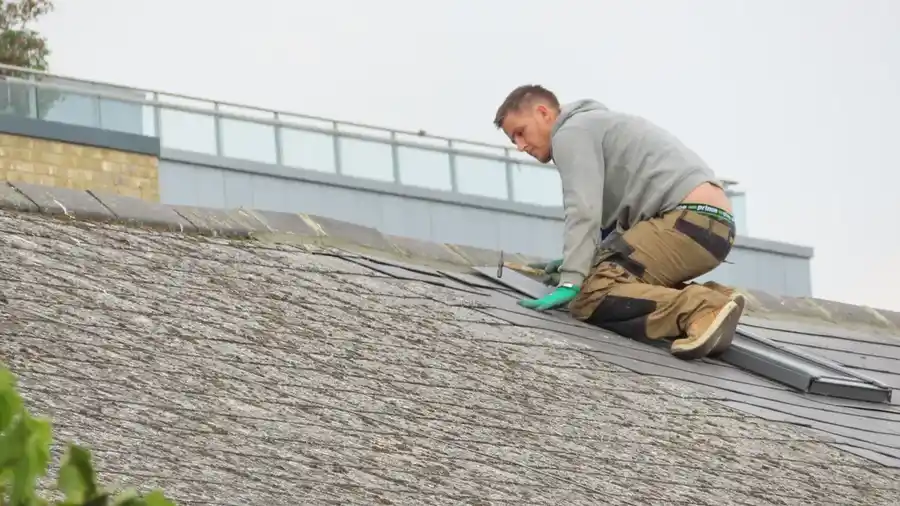
Foam stripping wins when the roof frame is salvageable and the spray foam is masking a limited amount of damage. That usually means the structure can still justify repair rather than reset.
A roof where the foam may be trapping moisture can still be a repair job. The tiles may remain usable, and the timbers may not have failed across wide areas. In that case, stripping is the cleaner route because it gives a direct view of the felt, battens, and rafters before a larger rebuild is committed to.
So, foam stripping is the better fit if:
- the roof is otherwise near mid-life
- the tiles can be lifted and reused
- defects are limited to certain bays or slopes
- you need to confirm the extent of timber repairs before deciding on a full strip
It can also suit a property where the owner wants to preserve as much original roof material as possible. That matters when the existing covering is still a good match and the roof has not reached the point where everything is being replaced anyway.
The downside is obvious. Stripping can expose more damage than expected, and it can leave you with a half-finished roof if the hidden decay is worse than predicted. That is the price of uncertainty.
Who Should Skip This: anyone whose roof already needs widespread battens, underlay, and tile renewal is usually better served by full roof replacement, not a staged rescue.
When is full roof replacement the better call?
Full roof replacement wins when the roof is already giving you three jobs at once: remove foam, repair timber, and renew the roof covering. At that point, stripping first and replacing later is often just an expensive detour.
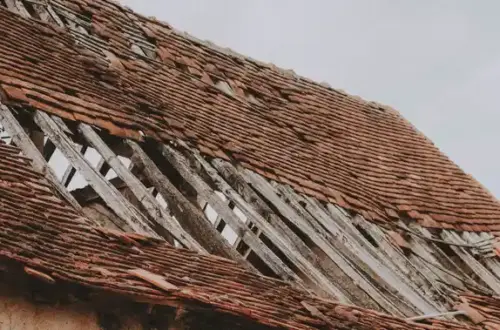
A roof with obvious age, failing coverings, and enough hidden doubt turns every opening-up into a diagnosis. If the roof needs major felt and batten replacement, the foam has stopped being the main issue. The roof system itself is tired.
On the other hand, a full replacement is the better call when:
- the roof covering is near the end of its life
- the underlay is degraded
- battens are failed or poorly fixed
- timber repairs are not limited to one small area
- access and labour would be repeated anyway if you started with stripping
This route usually gives the more predictable outcome. You reset the roof, remove the old build-up in one go, and avoid paying for partial work that gets torn out later. That predictability matters as much as cost, because a roof is not a cosmetic item; it is the shell that keeps the whole building dry.
The main drawback is the upfront scale. A full re-roof is more disruptive, and it may mean fewer reusable materials. If the tiles are still good and the timber is sound, replacing everything can be more than the building needs.
Who Should Skip This: a homeowner with a structurally sound roof and high tile salvage potential should not rush into complete re-roofing just because the foam looks alarming.
The honest side-by-side for a real roof
Full roof replacement is the safer default when hidden defects are likely; stripping is the better gamble when the roof has enough life left to justify investigation. The right answer changes with the age of the roof, the amount of salvage, and the amount of timber work.
A roof with spray foam is not automatically a replacement job, and it is not automatically a strip job either. The decision hangs on what the opening-up work will reveal.
Then, the strongest argument for stripping is control. You may be able to preserve more of the existing roof, keep the job smaller, and target repairs where they are needed. The strongest argument for replacement is certainty. You remove the uncertainty of hidden moisture, failed fixings, and repeated access.
What changes the outcome most
-
Condition of the tiles
If the tiles are reusable, stripping gains ground. If they are brittle or mismatched, replacement starts to win. -
Extent of timber damage
Local decay points toward repair. Wide decay points toward a full reset. -
State of the felt and battens
If both are tired, a partial approach loses value fast. -
Scaffolding and access
If access will be expensive either way, avoid doing the job twice. -
Need for certainty
If the property needs one clean outcome, replacement gives that more reliably. -
Reuse value of existing materials
Salvage can make stripping economical. If salvage is low, the savings disappear.
The best part is that this is where a proper roof inspection earns its keep. You are not paying for a slogan; you are paying for a decision based on what is actually under the foam.
The verdict: which one to choose and why
Choose foam stripping if the roof structure is still sound, the tiles are reusable, and the timber damage looks limited. Choose full roof replacement if the roof already needs broad felt, batten, and covering renewal. Neither is the right answer if the roof has major structural failure and the only sensible next step is a full technical survey before any work starts.
A simple test helps here. If the roof can be repaired into a sound state without replacing everything, stripping is the narrower and often smarter job. If the roof is already deep into end-of-life territory, a full re-roof is the better spend because it avoids repeated labour and repeated risk.
That is the practical split:
- foam stripping is for roofs with salvage value
- full roof replacement is for roofs with poor salvage value and broad deterioration
If you need the wider context for timber decay, this decision sits under the hub on spray foam roof timber damage, because the roof’s structure is the real issue, not the foam by itself.
When should you stop trying to save the roof?
You should stop trying to save it when the repair list is no longer smaller than the replacement list. Once that happens, the economics turn against stripping and toward a full rebuild.
A roof with rotten timbers, weak fixings, tired felt, poor battens, and coverings that won’t hold a long repair has crossed the line. That is the point where the job stops being a rescue and starts becoming a reset.
So, stop pushing for stripping and move to full replacement when:
- multiple roof slopes show deterioration
- hidden moisture has affected more than one area
- the salvageable tile count is too low to matter
- repeated patch repairs would still leave an old roof in place
- the building needs one durable fix rather than staged work
A roof can be saved only so many times before saving it costs more than replacing it. The better decision is the one that leaves you with one finished roof, not a queue of future call-backs.
The practical cost rule that saves money
The most cost-effective long-term choice is the one that avoids paying twice for access and twice for labour. That is why the stripping-versus-replacement decision should be made from roof condition first, not from the headline of the quote.
Two quotes can sit in front of you, and both may look painful. One is for stripping, one is for a full re-roof. The quote that matters is the one that includes the roof you will still have after the job is done.
A good decision usually follows this order:
- check whether the roof frame is recoverable
- check how much tile salvage is realistic
- check whether felt and batten replacement will be needed anyway
- check whether the scaffolding costs will be paid once or twice
- choose the option that finishes the roof in one pass
So there is the clean answer. Strip if the roof can still be meaningfully preserved. Replace if the roof is already too far gone to justify piecemeal work.
Drafted with AI; not yet reviewed by a person.


6 Comments on “Foam Stripping vs Full Roof Replacement”