








Last updated: November 16, 2026
Quick answer: for spray foam residue cleaning on timber, there are 2 practical routes, and chemical cleaning is usually the better first choice when the foam is still bonded in pores or grain lines; sanding works best when the surface is already stripped and you only need to remove the last thin film without pushing residue deeper into the wood. On rafters and other exposed timber, the wrong choice can leave residue that interferes with later preservative treatment, so it is worth checking the timber condition and, if needed, consulting a professional before you start.
Key takeaways
- Chemical cleaning is better for getting under stubborn polyurethane residue and lifting foam from grain, but it can carry VOC exposure and leave solvent behind in the timber.
- Sanding is better for a dry, accessible surface where the goal is a final clean-up pass, not heavy removal.
- The main risk with sanding is that it can drive residue into pores or rough the timber so much that later timber preservative treatment becomes patchy, so it is wise to consult a professional if the rafters are already marked or soft.
- The main risk with chemical cleaning is that some solvents can soak into the wood and complicate later fungicidal timber preservative treatments, so consult a professional if you are unsure about product choice or drying time.
- If the timber is already heavily scarred, neither method should be the first move without checking the condition of the rafters.
What is the real difference here?
The real difference is that chemical cleaning attacks the foam bond, while sanding removes material by abrasion. That matters because spray foam residue can sit on top of timber and also bite into the grain, and those two jobs do not call for the same method.
Specifically, chemical cleaning is aimed at polyurethane dissolving solvents and related n-methyl-2-pyrrolidone alternatives, but it can raise volatile organic compounds concerns and may leave chemical residue in the wood. Sanding, including orbital sanding, is cleaner in the sense of no liquid soak, but it is less selective and can widen soft grain lines or leave foam smeared across the surface.
For timber surface residue clearance, I would treat chemical cleaning as the method that gets you closer to removal and sanding as the method that finishes the surface. The wrong move is to assume sanding alone always solves spray foam residue cleaning methods on rafters. In wood with open grain, sanding can polish the residue into the surface instead of lifting it out.
A useful reference point is the EPA page on volatile organic compounds and OSHA’s guidance on hazard communication. They do not answer the timber question for you, but they explain why solvent choice and ventilation matter before any sanding starts.
Timber sanding: when it works and when it fails
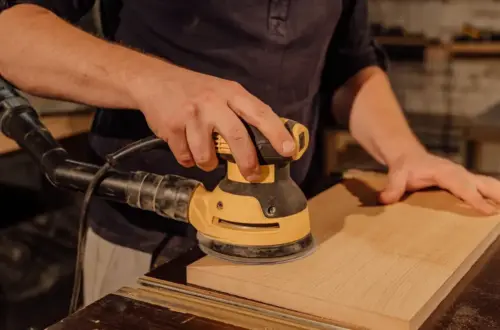
Therefore, timber sanding wins when the surface is already mostly clear and the job is about removing the final skin of residue. On clean, dry rafters, orbital sanding can flatten ridges and prepare the timber for a preservative coat better than a sloppy solvent wipe.
The strength of sanding is control. It does not introduce liquid into the wood, so it avoids the wood grain penetration problem that can happen when a chemical cleaner wicks into end grain or soft patches. That makes sanding a practical choice after the bulk of the foam has already been detached.
Its weakness is that it is not a true remover of deep-bonded spray foam. If the residue has keyed into grain, sanding can leave behind glossy smears or push soft foam dust into the pores. That becomes a problem later if the surface is meant to take a fungicidal timber preservative treatment evenly, so a professional check is sensible when the grain is open or uneven.
Sanding is best for a person dealing with a relatively thin residue on accessible rafters, especially where the timber is sound and the goal is surface preparation rather than full chemical breakdown. It is not the right first choice for timber with rough saw marks, checks, or foam trapped in the grain. For related sequencing, see the hub on spray foam insulation removal techniques.
Pros
- No solvent soak into the timber
- Better for final preparation before preservative treatment
- Works well on accessible rafter faces
Cons
- Can smear residue into pores
- Less effective on thick polyurethane residue
- Can roughen timber if pushed too hard
Chemical cleaning: where it wins
Meanwhile, chemical cleaning wins when the foam is stuck in the grain or where sanding would only chase the residue around. It is the stronger choice for polyurethane dissolving solvents and for residue trapped in rough timber, joints, and corners.
That strength comes with a trade-off. Some cleaners, including n-methyl-2-pyrrolidone alternatives, are chosen because they are less harsh than older solvent systems, but they still need careful handling. VOCs can be a real concern in enclosed roof spaces, and a cleaner that softens residue can also leave behind a film that needs removal before preservative treatment.
The upside is that chemical cleaning can reduce the amount of mechanical work needed. On timber with deep texture, it can break the bond first so that a light sanding pass finishes the job. That is often better than aggressive sanding from the start.
Chemical cleaning is not for anyone who wants a one-step answer. It is also a poor fit if the roof space has poor access, weak ventilation, or already fragile timber surfaces. If the goal is a pristine sanded finish and the residue is already loose, chemical cleaning may be more effort than benefit. For timber follow-up, the page on timber preservative treatment is the next useful reference.
Pros
- Better at softening bonded polyurethane residue
- Reaches grain and corners that sanding misses
- Can reduce the amount of abrasion needed
Cons
- May leave solvent residue in wood pores
- Carries VOC and ventilation concerns
- Can complicate later preservative treatment if not fully cleared
The honest side-by-side
Ultimately, the main decision is not “cleaner versus sanding” in the abstract. It is whether the timber still holds bonded foam in its pores and how much later preservative performance matters. If the answer is “a lot,” chemical cleaning gets the edge because it attacks the residue before the timber is abraded.
| Criteria | Timber sanding | Chemical cleaning | Winner for this condition |
|---|---|---|---|
| Deep foam in grain | Weak | Strong | Chemical cleaning |
| Final surface prep | Strong | Moderate | Timber sanding |
| Risk of driving residue into pores | Higher | Lower | Chemical cleaning |
| VOC exposure | Lower | Higher | Timber sanding |
| Chance of leaving solvent behind | None | Present | Timber sanding |
| Speed on stubborn bonded residue | Slower | Faster | Chemical cleaning |
| Suitability for rough rafters | Fair | Strong | Chemical cleaning |
| Suitability before preservative treatment | Strong if already clean | Strong only if fully rinsed or cleared | Timber sanding |
| Need for follow-up work | Often yes | Often yes | Tie |
| Best for damaged or soft timber | Limited | Limited | Neither |
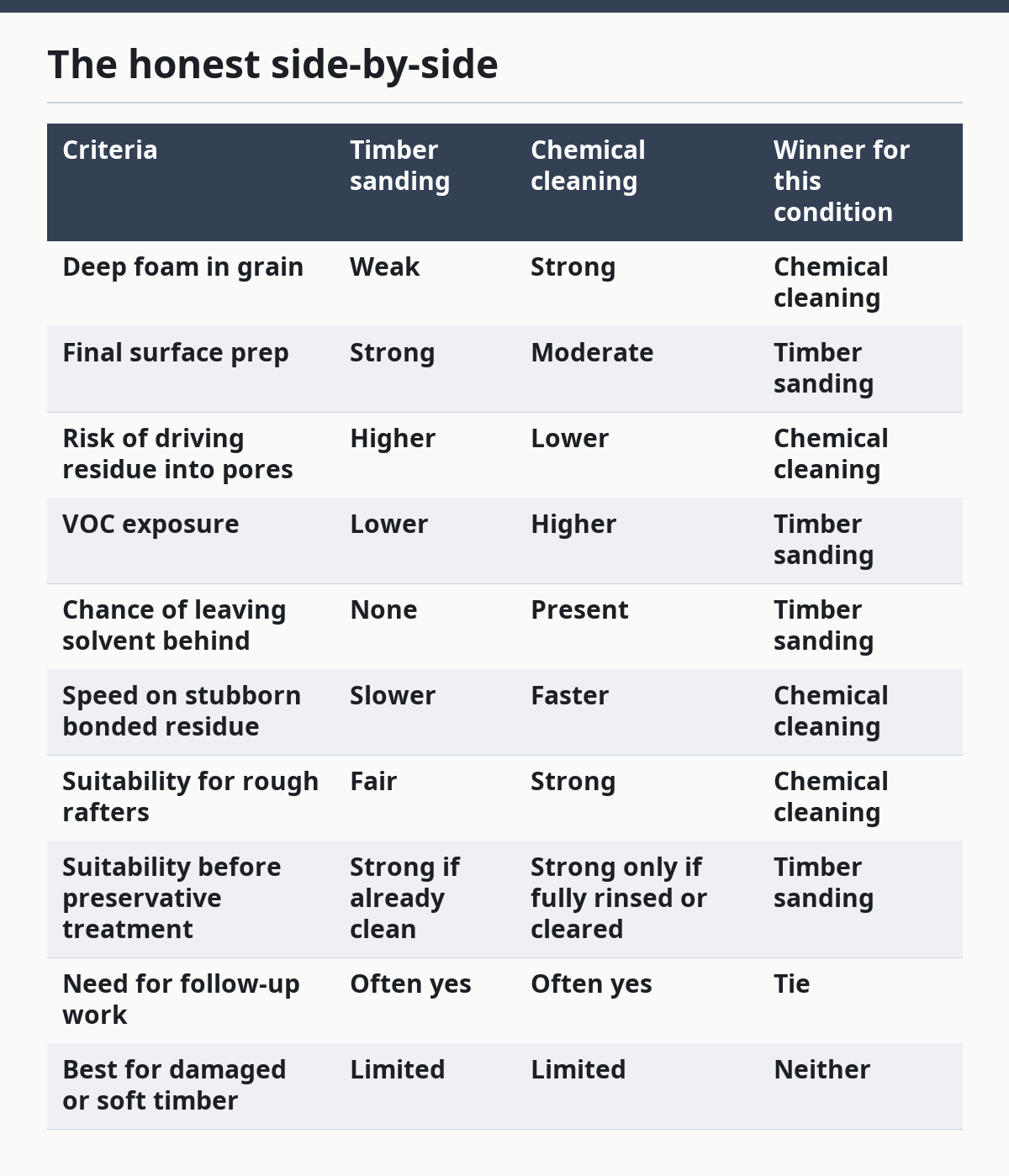
The table points to the same pattern seen on site jobs in this category: sanding is the better finishing method, not the better first attack. Chemical cleaning is the better first attack, not the final finish. That split is the part generic advice often misses.
Which method fits which kind of timber?
However, timber sanding fits dry, accessible rafters with light residue and a strong need for a clean, even surface. It is the better pick when the timber is already stripped and the only job left is to remove the last film before a preservative coat.
Chemical cleaning fits rough, porous, or deeply contaminated timber where foam sits in pores and grain lines. It is also the better choice when there is a polyurethane dissolving solvent designed to loosen the residue before any abrasion begins.
Neither method is a good fit for timber that is already badly degraded, because both can expose defects that need a different repair approach. In that case, surface clearance should be part of a wider timber assessment, not a standalone clean-up.
The other reason to separate the methods is drying time. A solvent-treated surface may need time before any further work, while a sanded surface is ready sooner but may still hold embedded dust. For later fungicidal timber preservative treatments, that difference matters more than most people expect.
When does the answer flip?
Since the overall recommendation flips in four situations, it helps to name them clearly. First, if the foam has already been removed in bulk and only a faint haze remains, sanding becomes the smarter choice because chemical cleaning adds risk without much gain.
Second, if the timber is highly absorbent or the grain is open and rough, chemical cleaning becomes the first move because sanding alone can chase residue deeper into the surface. Third, if ventilation is poor and VOC exposure is a concern, sanding should come first or the job should pause until conditions improve.
Fourth, if the timber is intended for immediate preservative treatment and there is any doubt about chemical residue, sanding is safer because it does not introduce another contaminant into the wood. That does not mean chemical cleaning is wrong; it means it needs a cleaner finish-up step than sanding does.
For broader removal planning, this page sits under the hub on spray foam insulation removal techniques, which is the right place to compare the wider method set before choosing a sequence.
The verdict: which one should you choose?
In short, choose chemical cleaning if the spray foam is bonded into timber grain, the surface is rough, and you need the foam softened before any finishing pass. Choose timber sanding if the residue is already mostly loose, the rafters are accessible, and the goal is a dry final clean before preservative treatment. Neither if the timber is fragile, the space is poorly ventilated, or the residue is so deep that surface work will only smear it.
Can you dissolve spray foam off wood with chemicals?
Yes, sometimes, but only in the sense that chemical cleaners can soften or break down spray foam residue enough to let it be removed more cleanly. They do not always erase every trace in one pass, and some products can soak into wood pores. That is why careful follow-up and ventilation matter before any timber preservative treatment, and why a professional should be involved if the wood is already stained, cracked, or soft.
Should you sand rafters after removing spray foam?
Yes, in many cases, a light sanding pass is the best finishing step after the bulk of the foam has been lifted. It helps even the surface and remove residue that a chemical cleaner loosened but did not fully clear. Heavy sanding is a mistake if the goal is to avoid driving residue deeper into the timber, so keep the pass light and consult a professional if the rafters are uneven or already damaged.
Drafted with AI; not yet reviewed by a person.



2 Comments on “Timber Sanding vs Chemical Cleaning for Spray Foam Residue Cleaning”